

How AI is frakensteining a new ‘Non-speak’ language.
In the beginning was the word. In the end, the word was.
The new language we are rapidly producing in our lives could be called Newspeak, as Orwell thought it would be best labelled, but in the forming cancer of our non-expressive reality it would more accurately be called Non-speak.
Without an individual will (meaning: the will to power of each of us behind the words) intent will be sucked hollow of meaning. Non-speak describes only what AI has already stolen, rearranged then produced for consumption.
I want to attempt an answer to a critical question about what is happening to language itself and our personal and collective expression in this new era of popular AI use. (AI: theft software.)
Any AI process is surely becoming an all, a singular voice because it is drawing from every word an image it has swallowed.
All the letter fragments, the lifeless coded data: the product can only be (what I call) a frakensteining of the language it has pieced together and reanimated in its own hyper-hybrid image.
The words we use can only then eventually be the words we have left after the old, pre-AI time passes away. When that old-speak language has become no longer understood by its former users and is a half-heard echo.
Before long, it is the dust of language: the dust of a reality soon long dead.
‘The word’ itself contains its own death and its own possible nullity. That’s what happens when any language loses its expressiveness and becomes today’s machine-speak that is the Non-speak I refer to (because I still can.)
But when the child has become an adult and the growing brain with its former plasticity has stopped developing, what is left?
As was known over a decade ago:
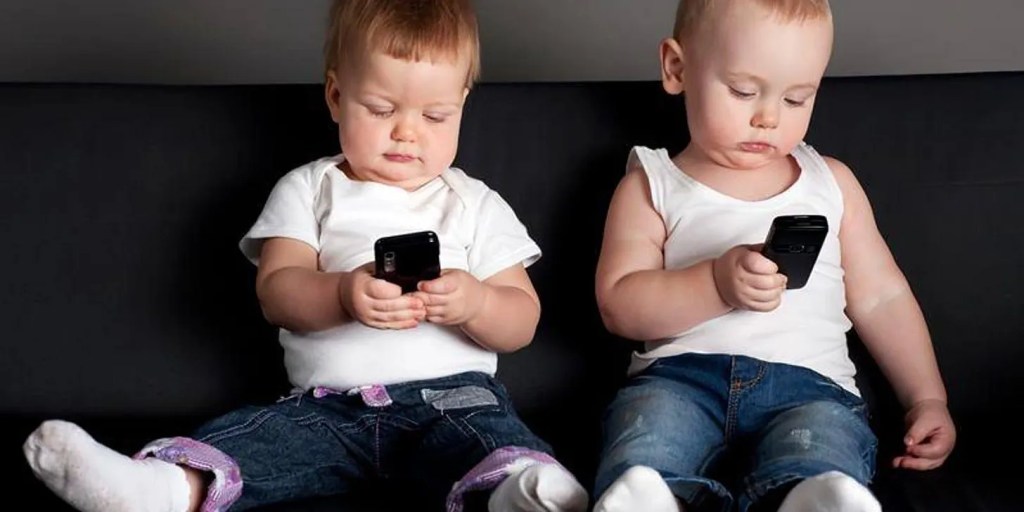
“Purposeful use of technology can support children’s learning but when technology becomes either a substitute or a proxy for relationships, language development in children can be held back. Communication becomes the transfer of impersonal information instead of the sharing of a passion. This can have an impact on language development for kids…”
So, if a child has learnt at school, and practised outside school, to give instructions to its device (a device they soon depend on to do their real-world communicating for them) how long will it be before the device is making only a couple of suggestions from the original prompt?
It’s clear the grown-up child is just selecting from the smallest of possible choices to express what is supposed to be its original expressive idea.
Here’s an ordinary example:
“Hey, [insert AI program of choice] give me options for lunch.”
“Well, [insert user’s name], yesterday you had a hamburger, fries and a choc shake. The day before you had pizza with cheese and a cola. These are your best-preferred options.”
The grown user clicks one of the options, most likely the pizza because he or she doesn’t want to have the same food as yesterday and the sterile process of ordering lunch, delivered by app service is done. It doesn’t take imagination to say that many young people would eat with the food in one hand, device in the other and eyes on it too.
Human feeding, done this way, is closer to an intravenous tube/drip-feed than it is a 20th century meal. This type of non-choice must surely become the absolute norm in only a matter of years. It probably already is for a few of the less adventurous among us.
Here then, yet another part of civilised society is reduced to rubble. Reality has crumbled. Technology has made it so easy.
(This article was first published on Substack here.)

