

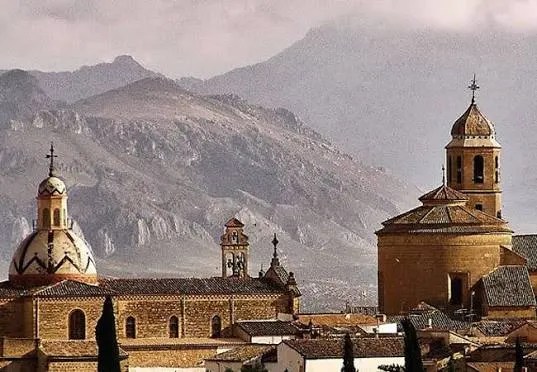
“An extract from Brett Hetherington’s ‘Slow Travels in Unsung Spain’ exploring the childhood home of Antonio Muñoz Molina.“
From the Madrid Review:
“Today, a free to read extract from the acclaimed travel memoir, ‘Slow Travels in Unsung Spain’ by @Brett Hetherington. Travelling to the Andalusian town of Úbeda, Brett sets out to discover whether the birthplace of one of Spain’s greatest living writers left its mark on his imagination.
He finds himself meeting Antonio Muñoz Molina’s family, hearing stories of the novelist’s childhood, and reflecting on the relationship between place, memory and literature. It’s a warm, thoughtful, human journey through Andalucía, and a nice introduction to Brett Hetherington’s writing.”
Extract also below:
In Castilian Spanish there is a quaint phrase used by someone who is irritated, maybe at a business meeting or political gabfest: “Irse por los cerros de Úbeda.” It means to wander around Úbeda’s hills and is used about a person who starts digressing and rambling either unconsciously or deliberately to avoid answering a question.
The phrase has its origins from the twelfth century when King Fernando III was about to attack the Andalusian town of Úbeda and one of his captains disappeared just before the battle. He came back after the city had already been conquered, and, when asked where he had been, said that he had got lost in Úbeda’s hills.
I didn’t get lost in its hills, but I had a hard time finding my destination – the final place I wanted to see before I turned and headed for home, way back in Catalonia. Every travel event has an endpoint. I should explain why mine was here.
For years I had been touched by the acute empathy in the writing of a man who originally came from Úbeda, a novelist and journalist named Antonio Muñoz Molina. I’d decided to see where he grew up to get a sense of who he once was, even though I knew he now spent his working and married life in the big cities of New York and Madrid.
I had the theory that a writer can grow despite his background and surroundings (or directly from them) and had the inclination to learn where this sensitive man had first found the intimate history around him that marks his later work as an adult.
Having turned up, I had no address for him, only harbouring a notion of possibly finding the part of the town where he had lived. Near the bus station, I asked a man where the tourist office was. His directions sent me down a street with plenty of traffic, but I soon learnt that there was no tourist office that way.
At that moment, I remembered the writer Fiona Pitt-Kethley’s European travel maxim: never get advice about where landmarks are from men – they are too busy looking at young females to know where most things are. After twenty more minutes of asking a number of local women in shops for help I finally found it down a narrow one-way street. I did not see a single sign for the tourist office anywhere.
The lone woman working behind the desk handed me a map of the town and when I asked, told me that Muñoz Molina still visits often because he has friends and family in the town. She wrote down an address for where he used to live, only about one hundred metres outside the limit of the ancient city walls.
I asked her if she had read any of his books. “Jinete Polaco,” she said: ‘The Polish Horseman,’ one of his Spanish prize-winning novels, this one based on the ‘immediate experience’ of his life and those of his elders. Like most of Muñoz Molina’s work, it has still not been translated into English.
Following the map, I ambled through the town. It was quiet. There were few people out and about on this hot early afternoon and I came to a small park that had a beautiful sweeping view of lines of olive trees lulling the eye across to softly rounded mountains and the widest of blue-sky horizons.
Down some stone steps there was an abstract-style statue of a soldier without a gun and the figure of a woman cradling a baby. At the base of the statue were two stone books. A young Antonio would have seen this. Maybe he had been inspired by it.
Only a couple of minutes’ walk further on, coming from an apartment I heard piano scales being played. This matched the genteel bourgeois feel of the area and turning into the street I’d been told was once Muñoz Molina’s, I noticed that just like the small town where I live, there was still the occasional house-front that has a metal ring where you can tether up your horse. A builder was working outside a house, and I asked him where the old home of the author Muñoz Molina was, though I knew which number it was.
To my surprise, he knew the family well and asked me if I wanted to meet them. I said that it would be very kind of him to introduce me and he took me directly to the other side of the street, knocking on the thick old wooden door of a narrow, white two-storey building.
A short woman of about sixty- five years of age opened the door. She had auburn coloured hair and was dressed in a floral apron – the unofficial uniform of the older Spanish housewife. “Yes, I am one of Antonio’s relatives,” she said standing in the doorway, her arms folded. What did I want to know about him? I told her that I was from Australia and was an admirer of his writing, especially his book Sepharad. She corrected me on the pronunciation of the title and began to talk more openly.
“He lived in the house next door. My husband is Antonio’s uncle. You know, I was like a second mother to him. He used to play here in our house all the time. He had to work in the fields because his father made him, but when he was older, he got a job at the town hall in Granada. Antonio wanted to leave and he went to university in Jaen. He was thinking about writing – all these different kinds of ideas in his head,” she smiled to herself, remembering a moment half a century ago. “One day when he was a little boy, he held up a single raw chick pea and asked me ‘Tia Caterina, why is it like this?’ He was curious about everything.”
“Have you read any of his books,” I asked when she paused.
“Oh yes,” she said. “Jinete Polaco and you know we are all in it!” she laughed. “Antonio has won so many prizes, but he always comes back. Just last week he was here for the fiesta.”
I thanked her for her time and wished her well. Stepping back, I noticed a small yellow plaque up between the front door and the garage door of the house next to Aunt Caterina’s. It said: “The writer Antonio Muñoz Molina lived here for part of his childhood. Calle Chirinos.” Covering the tiny balcony above a plain white curtain was hung, allowing air and light to get in while maintaining privacy. It was the same method used in thousands of simple homes across Iberia.
At the bottom of the street was another park – this one less orderly and lacking any statues. There were half full beer bottles left standing, and clothes had been spread out to dry across the bushes and on the concrete. It had the abruptness of an end-of-town spot, and I could see a major ring road on the other side skirting the outside edge of Úbeda. This road was not marked on my map but was named Avenue Muñoz Molina.
To the sounds of cicadas, I walked back towards the main part of the town, now relieved that the culmination of this trip had worked out unexpectedly well. I had also been moved by the author’s aunt; the proud but not boastful way she spoke about him and when I saw an old woman carrying plastic shopping bags in the street – yet another abuela that looked like my grandmother who I last saw alive when I was only eight years old – my eyes filled with tears in this faraway place.
I stopped and stood still. My memory transported me to when my grandmother (with her Semitic facial features) my ‘nanny’ as we called her, would cuddle me and comfort me while wearing her padded dressing gown, just as I always picture her. My mother said it was because nanny was large and fleshy that I loved her embraces. But in truth it was because she is in the marrow of what I am and also, like Goytisolo, because of what he called a childhood that was “missing maternal warmth.”
It seemed to me that a young Antonio Muñoz Molina could not have lacked women’s influence in his developing years. I pictured the slow afternoon weekend lunches of his childhood: a grandmother or even two nearby with other aunts and probably female cousins all buzzing around talking in a typically lively Spanish way. And this, every Sunday, every festival day, every public holiday, every Easter, every Christmas.
Yes, it was clear to me now: the domestic world of General Franco’s traditional, small town Spanish woman. Babies and children at the very centre, the budding boy-writer there too, probably quiet and submissive but sharp with curiosity and his seeing eye. Mother, relatives, affection, care, love and food. Always food.
This background told me exactly why his writing regularly shows a subtle understanding of women that is rare in a male (writer or otherwise.) It also gave me reason to think again about some of his male characters: the henpecked husband, the regimented office-worker or the suburban sexual-fantasiser. In sleepy rural Úbeda all of them had their place and surely still do.
They are the other side of the coin; the products of a conservative social order that can stultify, benumb and even smother. As his Aunt Caterina had told me about the extended family being placed in one of his novels, “We are all in there.” She might well have meant the people of the whole town.
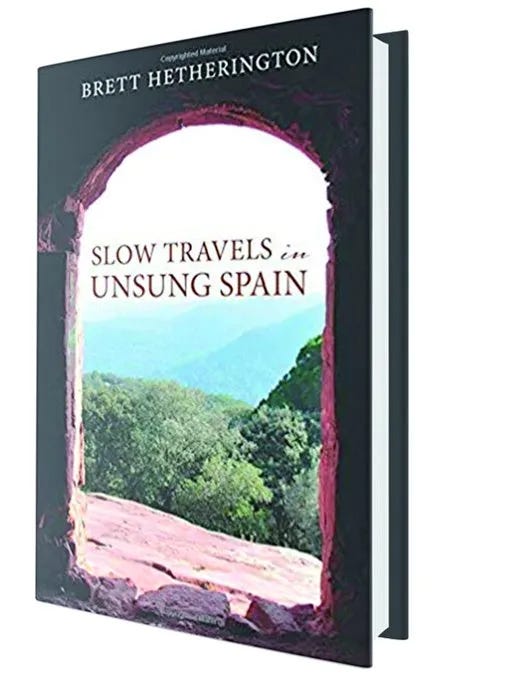
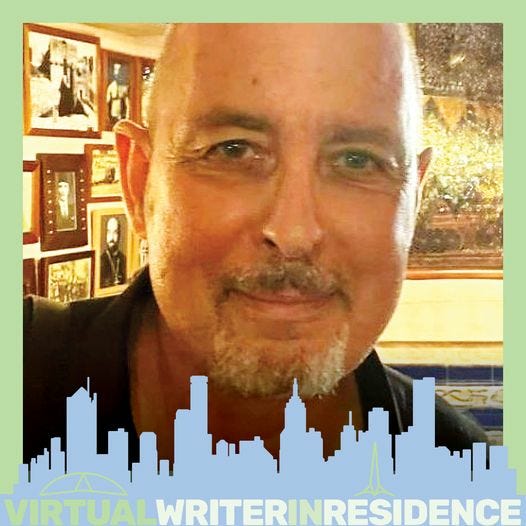
Brett Hetherington is the author of the non-fiction books “Slow Travels in Unsung Spain” and “The Remade Parent.”
He has been a regular commentator on Spain’s social and cultural issues for Australia’s ABC Radio and a long-time opinion columnist and reviewer for Catalonia Today magazine.
Brett is also a freelance writer, translator and teacher. Some of his work has appeared in Monocle guides, The Australian Journalism Review, Barcelona Metropolitan and Reportage magazine.
He has lectured at The University of Barcelona and was chosen as a 2024 UNESCO World City of Literature Virtual Writer in Residence for Melbourne, Australia.
Since 2006, Brett has lived with his partner/wife Paula close to their now young-adult son Hugo in Catalonia’s Barcelona region.
SOCIALS
 First thought
